The Vilnius Picture Gallery presents one of the most intriguing riddles of Caravaggio authorship
Exhibition opening at 5:30 pm Tuesday, 9 June, 2026
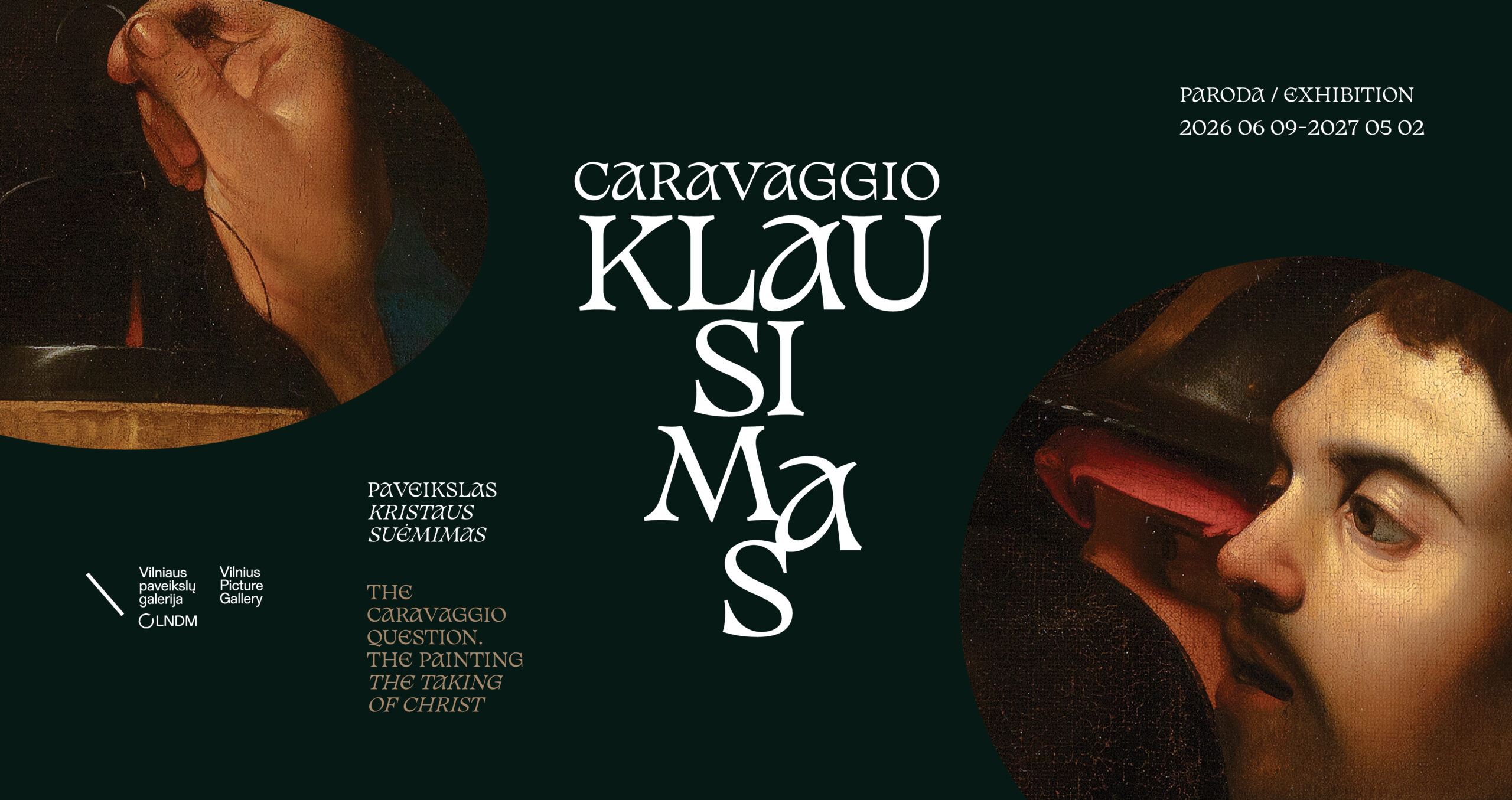 The Caravaggio Question: The Painting “The Taking of Christ”, opened on the 9th June, at the Vilnius Picture Gallery of the Lithuanian National Museum of Art is centred on the painting from the Odesa Museum of Western and Eastern Art, attributed to the Italian Baroque master Michelangelo Merisi da Caravaggio (1571–1610) and now subject of decades-long inquiry and debate regarding its origin, authorship and the role in the history of art.
According to Dr Aistė Bimbirytė, the co-curator and director of the Vilnius Picture Gallery, “the exhibition challenges the sceptical preposition once put forward by Théophile Thoré-Bürger, who claimed that „museums are cemeteries of art”. The painting that has arrived from Ukraine demonstrates the purpose of the museum as a vibrant space of investigations and dialogue, where museum items may become subjects of multiple questions, answers to which are sought patiently and built thoroughly from intuitions, technological examination, and elements of fact. In the process, new identities are forged, ages-old cultural roads come to cross and suddenly new ones are discovered. The exhibition, besides engaging the viewers with the painting’s history, its subject matter, and the aspects of authenticity, invites to contemplate the casting of knowledge and why sometimes doubt has the highest value.”
“With our project partners in Ukraine, we had the main mission of moving the painting outside the war zone. Now the museum exhibit is in the hands of researchers, conservators and museum curators. It will be on display for two years, at the Vilnius Picture Gallery and the Pranas Domšaitis Gallery,” Skaistis Mikulionis, Senior Project Curator of the International Cooperation Department of the LNMA, says.
In the shadow of Caravaggio: a 400-year story of the original and its copy
In 1602, a new painting entered the collection of the Mattei family – The Taking of Christ by Caravaggio, a dramatic scene showing Judas betray Jesus by a kiss, and including, on the far right, the man holding the lantern, a presumable self-portrait of the artist. The painter was paid 125 scudi for this work. In over ten years, the same family had a copy of the canvas painted by Giovanni di Attilio, at the cost of mere 12 scudi. In 1729, still both paintings were listed in the Mattei collections, yet after that, their roads parted. One of these canvases found its way into Dublin, to be linked to Caravaggio only in the late 20th century. Meanwhile, nineteenth-century-Parisian-art-market saw artwork attributed to Caravaggio resurface not on a single occasion. In 1868, Alexander Basilewski (or, Basilevsky), a diplomat and collector of Ukrainian origin, acquired one such painting, presumably either of the canvases of the Mattei collection. This was how the riddle of the history of art emerged to keep the researchers at variance until now.
To date, there are no fewer than twelve known versions of The Taking of Christ worldwide. The most popular hypothesis holds the painting in the collection of the Odesa Museum of Western and Eastern Art to be the earliest copy of the work by Caravaggio’s brush. Convoluted is not only the provenance of the painting, no less dramatic has been its recent fate: in 2008, the canvas was cut out from the stretcher and stolen; in a couple of years, it was found in Berlin badly damaged. Ten years after the theft, the conservation work on the painting was started in Ukraine. The lawsuit was interrupted this year by the expiration of the limitation period and the painting was presented in an exhibition in Kiyv. After a complicated journey across the war-ravaged country, it reached the Pranas Gudynas Conservation Centre of the LNMA. The team of restorers and researchers, Linas Lukoševičius, Regimantas Paulionis, Lukas Rakauskas, Tomas Ručys, Jūratė Senvaitienė, Algimantas Vaineikis and Rolandas Vičys, have carried out physical examination on the painting and ensured safety measures required for the display of the masterpiece. Now the painting is presented, for the first time, to the Lithuanian public, offering also a rare opportunity to experience first-hand how the history of art is made, verified and rewritten. The reception of the masterpiece at the gallery is enhanced by Ūla Žebrauskaitė-Malinauskė’s atmospheric exhibition architecture echoing the light and colour scheme of the work, and a subtly correlated design by Dominyka Gurskaitė.
Delving into the mysteries of the painting – events to accompany the exhibition
The multilayered history and iconography of the famous painting are also included in the exhibition at the Vilnius Picture Gallery. The viewers are invited to explore the scene of Judas’s kiss, which, over the course of time, has evolved from a Biblical narrative into a universal metaphor for betrayal and deception. The display allows a close exploration of the amazing Baroque chiaroscuro in the canvas, of some unexpected iconographic solutions, and other details which help to grasp why and how this painting is so unique in the treatment of its subject matter. The exhibition is accompanied by a rich educational programme. Several creative workshops “A Story of One Painting”, “Laboratory of Light and Shadow” “Observing a Picture” are intended for a deeper understanding of the subject matter of the painting and its specific artistic language. Exhibition curators, museum guide and conservator-guided tours will also take place.
- Click here to buy an e-ticket for the exhibition
- Plan your visit
- Book a tour in English: +370 681 90329, gidai.vpg@lndm.lt
4 Didžioji st, Vilnius, Lithuania
+370 5 261 1685
vpg@lndm.lt