Oriental Art Collection
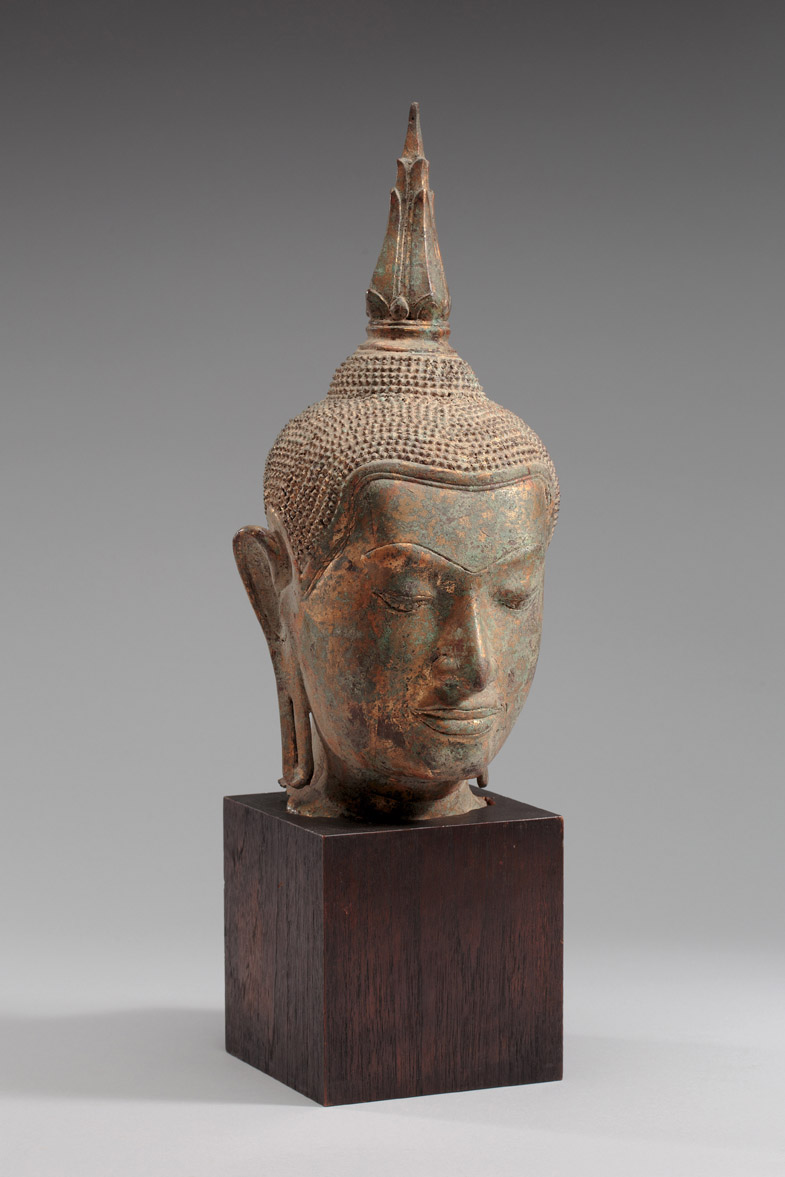
This year the Lithuanian Art Museum got rich with the Oriental art collection from various cultural regions of Asia, built up by Maskaliūnai family. It is an invaluable present given to Lithuania by Leonas Maskaliūnas, a famous construction engineer, a notable philanthropist, a Lithuanian American who never ceased fostering Lithuanian education and culture. Maskaliūnas originated from Rokiškis which he left in 1944 and moved to Germany. While there, he started his studies of architecture and engineering, that he later graduated in the United States and left for Asia to work. Engineer L. Maskaliūnas designed, constructed and consulted in sixteen Asian countries, mostly in Thailand where under his management Asia’s biggest port quay and over 100 bridges were built. He left for Asia together with his wife Nijolė (1932-2002); their son Linas, also an engineer working in the USA and Europe, grew up there. From all the countries they happened to live, Maskaliūnai brought exciting works of art. In three decades it turned into a substantial collection. Having returned from Asia, the works adorned their house in Chicago. For security reasons, the collection was kept in secret, no research and cataloguing was done.
Thai art works from Thailand make up a significant part of the collection: among them being an old bronze Buddha head with traces of gilding as well as fine examples of wooden traditional sculpture, especially the gilded statue of a peacock with inlays. Chinese art forms a major segment of the collection; it consists of paintings, sculpture, artisanry, but mostly items of applied art. One of the most spectacular is a folding screen coated with traditional varnish finish and decorated with inlays of nacre and semi-precious stones. Among the exhibits are vases and tiny containers decorated in cloisonné enamel technique, as well as artistic snuff bottles made of ivory and glass and dating back to the 19th cent. Japanese art is represented by porcelain vases and plates of various styles dating back to the late 19th and 20th centuries, as well as several examples of sculpture.
The most interesting exhibit from Indonesia is a painted Palintangan Calendar from Bali; according to the collector, it reaches us from the 18th cent. And was made by the artist from Bali’s last king’s manor. Such a 210-days calendar is still being used in Balinese religious rituals.
Another interesting part of the collection is Islamic art characteristic of abstract geometrical floral or vegetal motives. Among the exhibits are decorative plates of brass and copper, chased metal bowls from the Near East, Asian tea pots competing with each other in fancy shapes and ornaments. For the first time in Lithuania, a Persian version of marquetry called Khatam is being presented: a game table from Kashmir region and decorative boxes made in this technique may be seen at the exhibition. Four 20th cent. hand-knotted oriental rugs, one of them being made of silk, are also presented here. The collection can proudly boast of some exhibits from Southeast Asia that the Lithuanian Art Museum did not have before – these are a Cambodian relief print on rice paper of a female spirit Apsara so popular in Khmer art, antique cast metal weights in the shape of animals from Myanmar, a 19th cent. sculpture of a Buddhist goddess Green Tara, and jewelry perfume bottles from Nepal. It is for the first that the collection is presented to the public.
Radvila Palace Museum of Art,
24 Vilniaus st, LT-01402, Vilnius, Lithuania
+370 5 250 5824