Art destinations for the summer – new exhibitions by the Lithuanian National Museum of Art
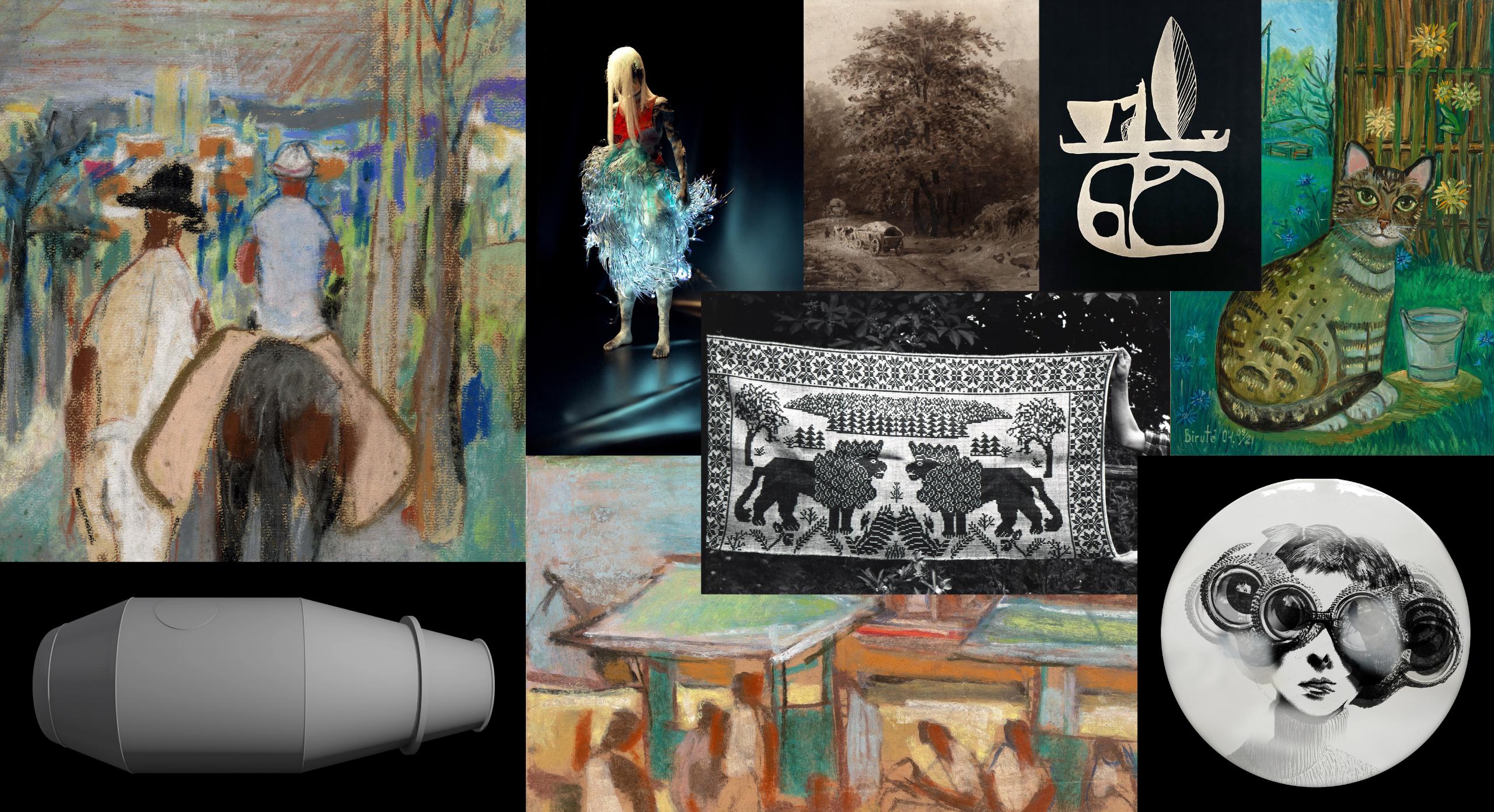 The Lithuanian National Museum of Art (the LNMA) embarks on its summer season with ten new events. A partnership of folk art and contemporary works, a comprehensive overview of the Lithuanian drawing tradition, new installations by the established contemporary artists and the legacy of Nijolė Šivickas de Mockus, created in Columbia and brought back to Lithuania, and the canvases linked to the name of Caravaggio – a staggering range of artistic experience is being put on for the Museum’s visitors. Rich in contrasts of epochs, art forms and cultures, it promises unexpected and stimulating encounters.
Dr Arūnas Gelūnas, the director general of the LNMA, shares his excitement about the season: “This summer, the Lithuanian National Museum of Art offers its visitors a selection of an exclusively broad range and quality: from folk art to world class Baroque masterpieces, from the beginnings of Lithuanian drawing tradition to before-unexhibited artwork by the Lithuanian émigré artists making a symbolical homecoming. We are so pleased to show to the Lithuanian public both, Nijolė Šivickas de Mockus’s artistic heritage, brought to the country for the first time, and the artwork linked to Caravaggio. Giving the insightful and intellectual contemporary artists space and focus is equally important.” “We hope”, he adds, “that these exhibitions will offer opportunities of cultural enlightenment together with pleasurable stimulation to our summertime visitors.”
The exotic summer interlude among cats and lions and the riddle of Caravaggio
The summer season has been launched by the Pamario Gallery of the LNMA, with its two new displays opened on the 5th June. The exhibition Some Cats are Lions brings together strange bedfellows – folk art and professional artwork, who invite to contemplate apparently different, yet closely linked worlds. Some of the works impart warmth and tenderness to mundane life, other, lionise power, courage and exclusivity – just like cats and lions do. The exhibition by Donatas Jankauskas-Duonis Boniface’s Holiday, on display at the same venue, also explores animalistic motifs. The title borrowed from an animation film, serves as a parable of a leisure time, constantly interrupted by work, duty and expectations by others. On a large screen, the artist conjures up an atmosphere of an exotic seaside, enriched by the zoomorphic sculptures of cyclopes, monkeys, gorillas, and a blue bird. Yet this extolment of exotic holidaying vibes is indeed a camouflaged parody of the cult of beauty and the desire to keep up with the Joneses.
Starting the 9th June, the Vilnius Picture Gallery hosts The Taking of Christ, an amazingly interesting 17th-century canvas, the attribution of which to the Italian Baroque genius Michelangelo Merisi da Caravaggio (1571–1610) still keeps the art connoisseurs busy. The painting arrives to Lithuania from the Odesa Museum of Western and Eastern Art. Among twelve known versions of this painting by Caravaggio, the Ukrainian canvas is often linked to the first copy of Caravaggio by the painter Giovanni di Attilio. The history of this particular The Taking of Christ is no less adventurous: it was looted in 2008 to be found later badly damaged. Quite recently its restoration was completed in Ukraine, and after a complicated journey across the war-ravaged country, it arrived in the Pranas Gudynas Conservation Centre of the LNMA. Following the painting’s physical examination and the carefully prepared measures for the safety of display, it is presented to the Lithuanian public together with a rare opportunity to witness how art history is born and re-written.
Installations of contemporary art and the line that started the history of drawing
On the 17 June, the Vytautas Kasiulis Museum of Art June presents an exhibition I Am Plural, which brings together two artists: Yuge Kurt (Vilnius) and Egmontas Geras (London) – whose collaboration was born not in a physical space, but within a hybrid digital realm. Living in different countries, the two artists have been sharing creative ideas for more than three years, yet they have never met in person. The exhibition can therefore be understood as the materialization of this unusual relationship – a space where their virtual collaboration takes on a physical form. By exploring the fragility and multiplicity of contemporary identity, both artists invite to revisit our concepts of contemporary existence and the ways we bond together.
Two contemporary art exhibitions will open in two different Lithuanian towns on the 18th June, one inviting to explore the strata of history, architecture and the layers of tangible heritage, and the other – to delve into the realm of memory, identity and personal stories.
The interdisciplinary artist Danas Aleksa will present his project Foot, Face, Vault and Key reinterpreting the history, architecture and transformations of the Museum of Applied Arts and Design in Vilnius. One of the major armouries of the Grand Duchy of Lithuania, the Old Arsenal in Vilnius – turned into Museum of Applied Arts and Design – functions as the core of the exhibition. The artist is interested in the process of transformation of an arms depo into a space of culture, art and memory.
Concurrently, the Pranas Domšaitis Gallery in Klaipėda opens the most recent exhibition by Žilvinas Landzbergas, Sister Tell Me Your Name. The artist creates a space perceived through the eyes of a small girl. The exhibition room becomes a kind of a domestic space with separate areas dedicated to everyone in the family. Detail and atmosphere are used to characterize the spaces of the father, mother, grandmother and the children. The exhibition appears like a fragmented puzzle or an attempt to approach the elusive sources of human identity in an abstract way. Names, smells, tactile sensations, places and moods intertwine into a continuous experience where everything happens simultaneously and becomes part of personal existence.
On the 23rd June, the Vilnius Picture Gallery opens In the Beginning Was the Line. Drawings from the 18th to the 21st Century, an exhibition reviewing the tradition of the Lithuanian drawing and its transformation over time. The display embraces examples of academic drawing from the art departments of Vilnius University, Vilnius Art School and the interwar modernist period, the late 20th century and the work of contemporary artists. The exhibition surveys the history of drawing, reasserting as it does, its relevance and the full breadth of its possibilities. The drawing is celebrated as a universal form of artistic expression bridging different periods and artistic experiences.
June: the time of art homecoming, and new channels of contemporary art
On the 2nd July, the Vytautas Kasiulis Museum of Art launches The Universe from a Spiral, the first presentation of Nijolė Šivickas de Mockus’s creative legacy, following its homecoming from Colombia last year. Nijolė Šivickas, a future sculptor and ceramic artist, was born in Kėdainiai. She fled Lithuania after the Second World War, withdrew to Germany, where she studied at the Academy of Visual Arts in Stuttgart, later resettling to South America. Her unique artistic idiom was shaped and matured there. Under a strong influence of pre-Columbian art, she produced sculpture, objects and installations mainly in clay, marrying the archaic forms with the modernist artistic language. Gradually her style shifted from expressionism towards abstraction. Her continuous experiments with materials testify to her phenomenal creative finesses. This year, the artwork by the émigré artist makes its first appearance to the Lithuanian audience. The return of the artistic legacy has been made possible also by the contribution of the Community of the LNMA Friends, which can be joined by anyone willing to become part of the museum’s initiatives and its future cultural discoveries.
From the 3rd July through the 2nd August, the Radvila Palace Museum of Art will host Caravaggio’s masterpiece Mary Magdalen in Ecstasy. Just like The Taking of Christ, on display at the Vilnius Picture Gallery, this canvas stands out not only through its artistic value: the story of the painting is also highly extraordinary. The work was considered lost since the early 17th century. It was believed that Caravaggio took it with him on what was to be his final journey to Rome, which he was not destined to reach, dying exhausted from an illness on his journey. St Mary Magdalene in Ecstasy was discovered only in 1914, in a private collection in Switzerland, where it had been passed down by the owners from generation to generation, without realizing its true value or authorship.
On the 24th July, the National Gallery of Art opens a new exhibition by Aurelija Maknytė, The Channels. It will feature, alongside the better-known pieces by the artist, her earlier, seldom exhibited light objects, photography, video, as well as other pieces beyond the existing art categories. Within light architecture designed by Beatričė Mockevičiūtė, Maknytė’s practice and her time will open up in the shapes of digital media, lizards, dinosaurs, TV sets, camera eyes and other things.
The LNMA invites, during the summer, to check out different artistic routes, from the installations pulsating with exotic holiday vibes, to the origins of drawing and the intricacies of the history of art. We invite our visitors besides discovering for themselves our new exhibitions, revisit also the earlier ones as well as the permanent displays. New publications from the LNMA offer interesting summer reads on the history of museums, the traditions of art collecting, the role of the northern imagery in the culture of the Baltic region, and the phenomena of the Ukrainian photography.
This summer, some powerful Lithuanian art can be experienced outside Lithuania: the UK Tate St Ives provides an opportunity to discover the art of Aleksandra Kasuba through her major exhibition Shelters for the Senses. In Italy, Castel Sant’Angelo, starting late June, offers a nice “Lithuanian” surprise, a display of the artwork from the LNMA collection by the renowned 19th-century painter Kanutas Ruseckas (1800–1860) Fire on the Tiber: Rome Through the Eyes of Kanutas Ruseckas. Art enthusiasts are also awaited in Venice, where the Lithuanian National Pavilion hosts Eglė Budvytytė’s animism sings anarchy (Gyva gyva-ta), a three-channel film installation, inspired by Marija Gimbutas. Detailed information on the exhibitions and events is posted on the website and social media of the Lithuanian National Museum of Art.