Vilnius Picture Gallery of the LNMA presents a conserved image of Our Lady of Sokal
Exhibition opening at 5 pm Wednesday, 8 April, 2026
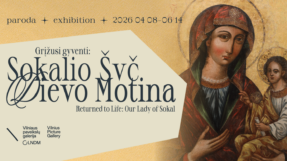
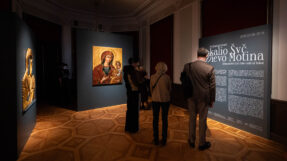
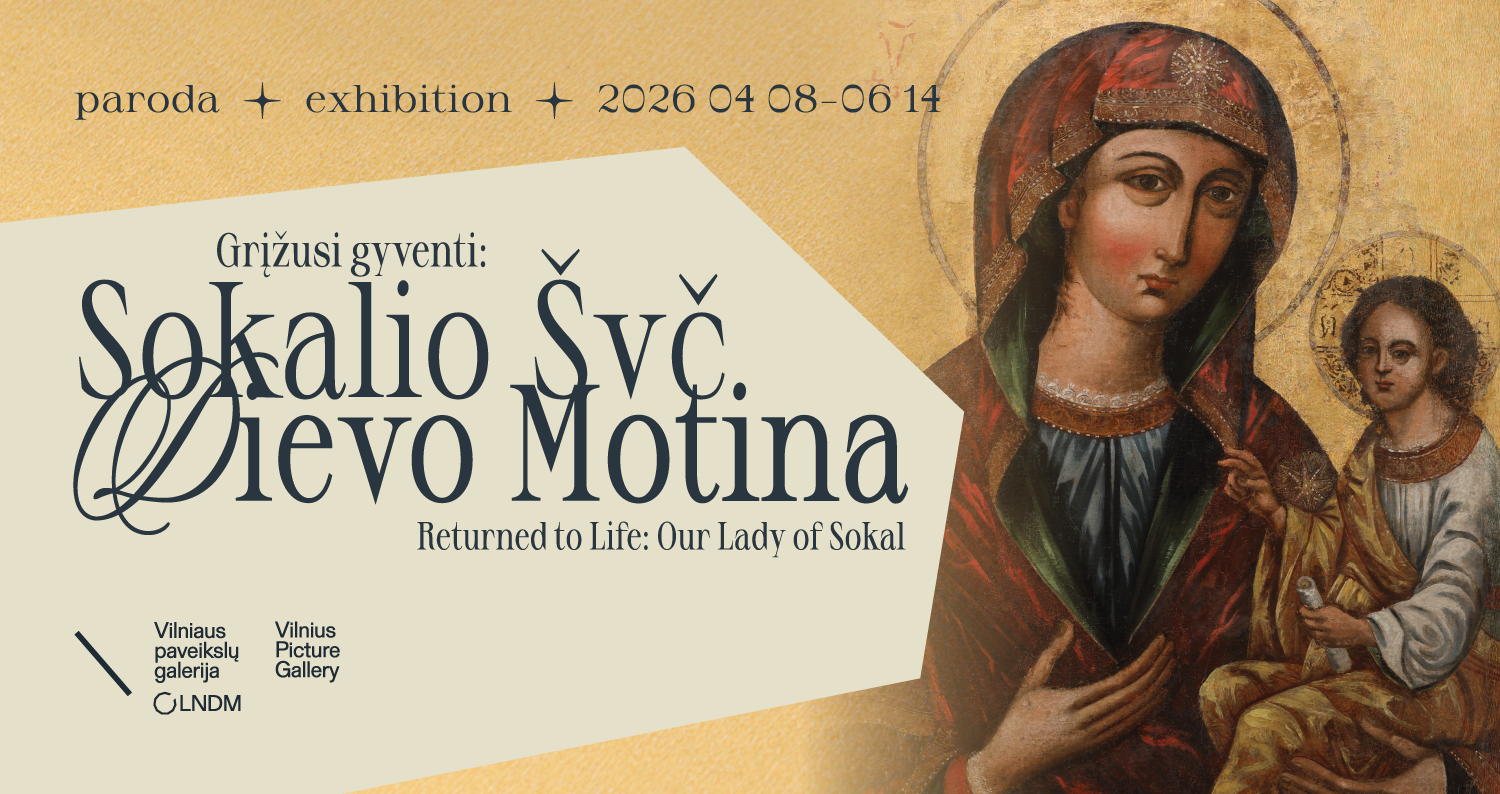 Wednesday, 8 April at 5 pm, the Vilnius Picture Gallery of the Lithuanian National Museum of Art opens an exhibition Returned to Life: Our Lady of Sokal. The exhibition presents a sacred image of great significance to Lithuania, Ukraine and Poland, famed over the long centuries, through miraculous graces to the faithful. The painting and its decorative woodwork overlay have been brought to life by the conservation and restoration specialists of the Pranas Gudynas Conservation Centre of the LNMA. After the exhibition the image will return to the altar of Our Lady in the Church of St Francis of Assisi and St Bernardino of Sienna in Vilnius.
“It is a homecoming of this moving piece of art – the image of Our Lady of Sokal painted in the late 17th – early 18th century – to the contemporary world of art treasures. The journey has been long and far from easy, but today we celebrate this crowning occasion – one painting exhibition which is the first public appearance of the reborn Our Lady of Sokal. I extend my heartfelt gratitude to the scientists and specialists in conservation of the Pranas Gudynas Conservation Centre who have done the examination and conservation work on the image, to the art historian Dr Rūta Janonienė, Fr Arūnas Peškaitis OFM, and everybody who contributed to putting the exhibition together,” Dr Jūratė Senvaitienė, director of the Pranas Gudynas Conservation Centre shares her joy with the successful collaborative result.
“This event is not only a presentation of a rare work of art to the public. We also want to express our respect and admiration with the work of our colleagues whose efforts bring such priceless treasures back to life. The painting of Our Lady of Sokal and its woodwork overlay were in a very poor condition before the conservation effort started, so it is hard to image the amount of patience and mastery it took to at least partly recover the original work. Let this exhibition strengthen the awareness that the existence of cultural heritage, an inherent part of our identity, should not be taken for granted without a constant care, responsibility, and a quiet, often invisible work which can be appreciated only when something that was nearly lost, is given a new voice,” says Dr Aistė Bimbirytė, director of the Vilnius Picture Gallery of the LNMA.
The holy image – steeped in legend, revered as miracle-working
Christian tradition attributes the first painted image of Our Lady to St Luke the Evangelist while the copies of it are believed to have proliferated across the entire Christendom. Legend has it, that one such was painted in the late 14th century at the court of Jagiełło by an artist of Lithuanian roots, called Little Grass Snake, baptised as Jacob. The painter lost his eyesight and set off on a pilgrimage to pray at the miraculous image of Our Lady in Częstochowa – and regained his eyesight. As an act of gratitude, he was getting ready to paint a copy of the image that healed him, but discovered, in his studio, an already painted image of Our Lady. According to the legend, it was a heaven-sent reward for his strong faith. When he took the image to the Bernardine Monastery in Sokal (now, Ukraine), stories about its miraculous power started spreading around by the word of mouth. In 1724, the image of Our Lady of Sokal was crowned with pontifical crowns, which is the official act of veneration of the Roman Catholic Church recognizing the miraculous power and significance of the image to the faithful. Though the original painting was lost to the fire in the 19th century, the story of the image lives on.
The image of Our Lady of Sokal presented at the Vilnius Picture Gallery is mentioned from 1713, and is, therefore, considered to be one of the earliest copies of the miraculous icon. The painting is also linked to the graces experienced by the faithful. When the soviet occupying authorities confiscated the Bernardine Church from the faithful, the altar holding the image also was damaged, and the painting finally found its way into the storerooms of the museum, where, over time, it fell into oblivion. It did change a lot, and was identified again only in 2012. This time, it was for the specialists of the Pranas Gudynas Conservation Centre to “work miracles” by bringing the image to a new life.
The splendour saved for many generations to come
The image of Our Lady of Sokal was changed over several hundred years: it was repainted several times and reduced in size. Many harmful effects were brought about by time: the protective layer of varnish was darkened, the canvas deformed, the layers of paint and ground were crumbling, and the velvet covering of the painting was fraying and torn.
The technical examination of the painting, conducted by the specialists of the Pranas Gudynas Conservation Centre prior to the conservation and restoration process, has established that the picture was painted in tempera, using red and yellow ochre, lead white, smalt and copper green. The physical analysis revealed also a detailed under-drawing hidden by the later layers.
The conservators have bound the layer of paint, relined the canvas, removed surface dirt, thinned the layers of varnish, and removed part of the later repaints. The areas of paint loss have been retouched, in some places, fragments of the drawing and painting have been recreated and a new protective layer of varnish applied. The decorative linden tree casing has also been restored. It has been established that the carved revetment was restored several times previously and most recently covered in copper powder paint. The lost places have been filled in and retouched in watercolour, thus optically restoring the impression of shining gold.
The exhibition Returned to Life: Our Lady of Sokal will run at the Vilnius Picture Gallery until 14 June. It will be accompanied by tours guided by the conservators and museum guides, which, alongside with the educational events, will facilitate the understanding of the iconography of the painting and the process of conservation.
Exhibition Organiser LNMA Vilnius Picture Gallery
Curators: Aistė Bimbirytė, Gabija Kasparavičiutė-Kaminskienė, Joana Vitkutė
Coordinator Algimantas Vaineikis
Conservators: Arūnas Baublys, Rūta Kasiulytė, Linas Lukoševičius, Greta Žičkuvienė
Conservation Scientists: Jurga Bagdzevičienė, Irena Bubinienė, Rūta Butkevičiūtė, Laima Kruopaitė, Dalia Panavaitė, Rūtilė Pukienė, Tomas Ručys
Photographer Vilma Šileikienė
Architect Ūla Žebrauskaitė-Malinauskė
Designer Ieva Jackutė
Editor Ieva Puluikienė
Translator Raminta Bumbulytė
Partners: Monastery of St. Francis and St. Bernardino, Lithuanian National Radio and Television
We would like to thank Dr Rūta Janonienė, Fr Arūnas Peškaitis OFM, Fr Julius Sasnauskas OFM for their help in organizing the exhibition.
- Click here to buy an e-ticket for the exhibition
- Plan your visit
- Book a tour in English: +370 681 90329, gidai.vpg@lndm.lt
4 Didžioji st, Vilnius, Lithuania
+370 5 261 1685
vpg@lndm.lt