The autumn season at the Lithuanian National Museum of Art: returning masterpieces, new names, and unexpected ways to engage with art
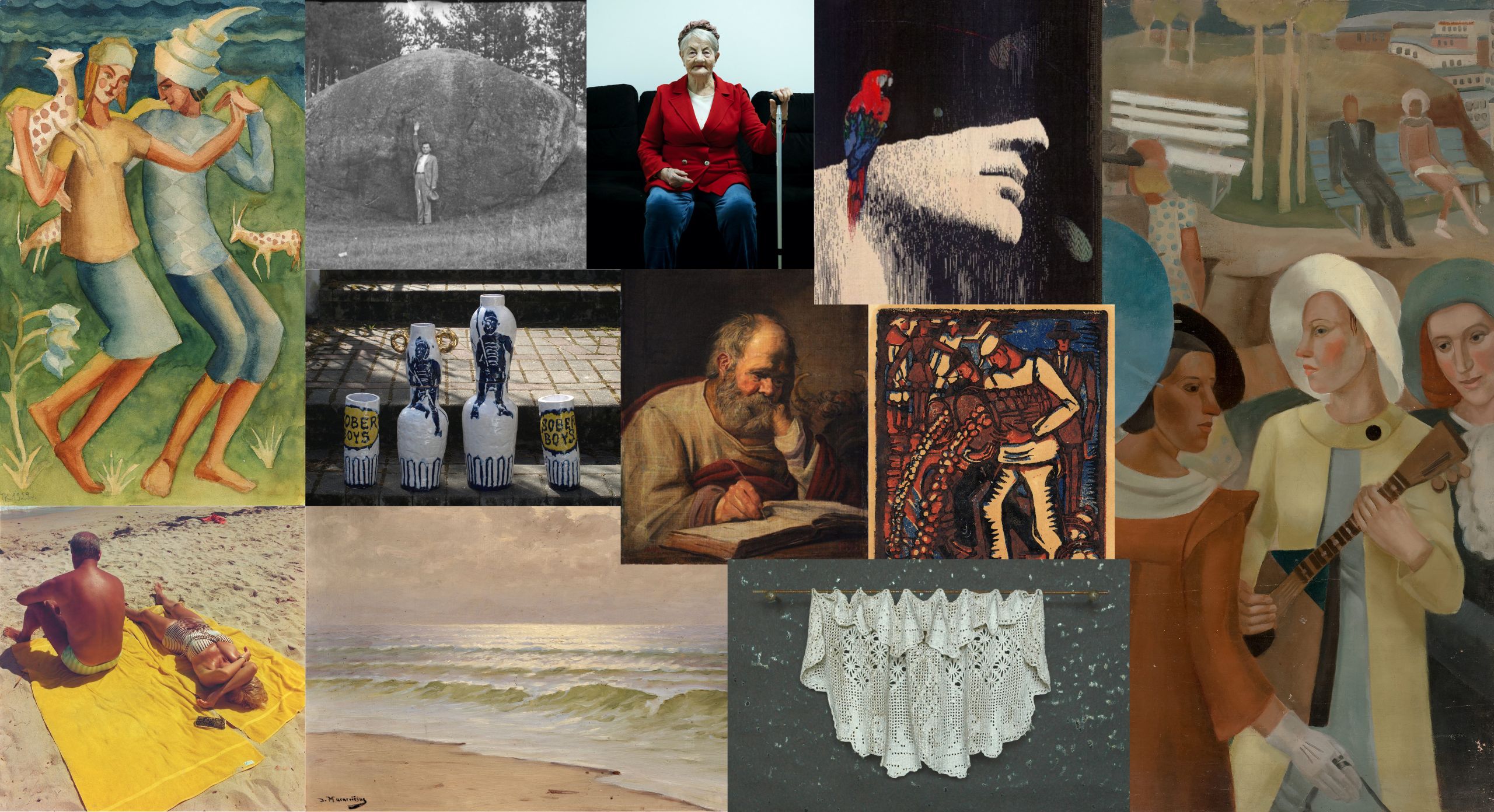 As the days get cooler, the Lithuanian National Museum of Art (LNMA) invites visitors to brighten up the season across its exhibition venues. As fall foliage fades, the LNMA museums and galleries will launch 13 new exhibitions, spanning diverse periods and forms of art. Beyond promising a cozy refuge from capricious autumn showers, the upcoming season promises an inspiring cultural calendar. Among the first events of the season is EDUFEST, a festival of art and education, showcasing the museum’s approach to public engagement, complemented by the latest LNMA publications to deepen visitor experience of the exhibitions.
‘Though autumn is often perceived as monotonous and gloomy, inside the LNMA exhibition venues it will be vibrant and bursting with colour, spanning diverse periods and geographies, and exploring the breadth of human experience,’ says Dr Arūnas Gelūnas, Director General of the LNMA. ‘This season’s exhibitions invite visitors to reflect on personal and collective memory, society-shaping shifts, human connection to places, nature, and material. I hope that each visitor will find their own shade of autumn here and connect to works of art not only through visual contemplation, but also actually touching them.’
September: time for the young artists’ ideas; the return of masterpieces; woven happiness, and the EDUFEST
On 10 September, the 16th edition of the Young Designer Prize exhibition – organized by the Vilnius Academy of Art – kick starts the autumn season. Creative explorations by 15 most promising design graduates go on show for public appraisal until 4 October at the Museum of Applied Arts and Design in Vilnius.
On 17 September, the Museum of Applied Arts and Design opens an exhibition titled Feliksas Jakubauskas (1949–2025): The Happiness of Weaving, spanning over four decades of the celebrated textile artist’s career. The tapestries on display will feature compositions of the artist’s favourite geometrical shapes – squares, triangles, pyramids, fans, alongside straight and diagonal lines – structured rhythmically and harmoniously like music or poetry. Included views from the workshop will evoke moments of weaving the way they were captured by the artist.
On 19 – 20 September, the courtyard of the Chodkevičius Palace becomes an open ground for artistic creativity as the museum hosts the 2nd edition of a free educational event titled EDUFEST. Visitors across all ages all invited to take part in its hands-on workshops and artistic experiments, and to find out about education programmes run by the different branches of the LNMA. Participants of the festival will encounter the museum as a vibrant, welcoming cultural space where they can explore multiple, sometimes not readily apparent, ways to engage with art.
On 22 September, the Radvila Palace Museum of Art brings back the Masterpiece Room, a project that has previously enjoyed immense viewer acclaim. Conceived by an interdisciplinary group of art historians and artists, the immersive environment will surround visitors with rich historical context while enabling a quiet, undisturbed moment with the art. The initiative once again features The Evangelist Luke and The Evangelist Matthew by Dutch Golden Age master portraitist Frans Hals. The masterpieces were brought to Lithuania from the Odesa Museum of Western and Eastern Art following the start of a full-scale war against Ukraine.
The Memory Chapel and never-ending summer in coastal Lithuania; Bauhaus-inspired ideas and echoes of New York in Vilnius
On 23 September, the Palanga Amber Museum launches Andrius Erminas’s solo exhibition titled The Memory Chapel. The Sun Above a Cabbage Field. His conceptual sculpture pieces going on show in Palanga carry on the artist’s explorations on the themes of personal and collective memory, place and identity. Casts from cabbage heads made specially for the museum space will reference the myth of birth and genesis. By transforming the dull industrial materials into sculptural symbols, the artist pairs the historical context of the building and his childhood memories into a unique archive of memory.
The very palette-intensity of Andy Sweet’s (1953 – 1982) expressive colour photography exhibition, opening on 8 October at the Pranas Domšaitis Gallery, can be trusted to brighten up the gloom of autumn. The American photographer from Miami Beach evokes in his pictures the life of seemingly careless ‘capital of sun and fun’, yet his photographic chronicles reflect some deeper and unsettling aspects of the social change among the residents of Miami Beach – Jewish traditions permeating American daily life, the emerging LGBTQ+* community, alongside racial and ethnic segregation. In his ironic pictures, hidden themes emerge from behind the sun-tanned bodies, such as the desire to belong to a community or the fear of the passage of time. Observing his protagonists with tenderness, Sweet created an ode to his beloved town – the place where summer apparently never ends.
On 9 October, the National Gallery of Art opens an exhibition spanning the life and career of the architect Vladas Švipas (1900-1965). The one and only Lithuanian who had studied at the Bauhaus and afterwards applied the ideas of rational planning in Kaunas, was also dealt a war-refugee fate in a German DP camp, followed by the hardships of integration as an immigrant to New York City. The exhibition tells Vladas Švipas’ personal story, yet alongside, it traces a transnational trajectory of a modernist architect whose career evolved against a backdrop of the changing political regimes and major historical shifts.
On 14 – 16 October, the Vilnius Picture Gallery holds an international conference titled Same, but Different: Copy, Pastiche, and Forgery in Visual Art. The event explores the phenomenon of the artistic copy across cultural, social, and political contexts, ranging from historical workshop practice of learning under a master, to contemporary challenges in attribution, examination, the art market, and legal regulation.
The alchemical transmutations and tactile art at the Radvila Palace
On 15 October, the Radvila Palace Museum of Art opens an exhibition titled Sulphur, Salt, and Mercury structured around the principles of alchemical thought.
The Middle Ages and Renaissance saw alchemy flourish in royal and aristocratic courts where the practitioners sought to turn base metals into silver and gold or to create an elixir of eternity. At its core, alchemy was about spiritual and psychological transformation, using physical matter as a symbolic mirror. Rather than presenting sulphur, salt, and mercury as chemical substances, the exhibition framing uses them as metaphors for the fundamental potential to change. Alchemy will become a lens to explore the transformations across matter, nature, the human body, and consciousness.
On 22 October, the Radvila Palace Museum of Art opens an exhibition designed for both visual and tactile appreciation of the work by Leonas Strioga, one of Lithuania’s most prominent artists, a recipient of the Lithuanian National Prize for Culture and Arts. Strioga’s works are uniquely suited for hands-on engagement. Throughout his long career, he worked across diverse mediums, including stone, marble, granite, gypsum, metal, terracotta, and wood. By inviting visitors to explore texture, temperature, and form through touch, the exhibition highlights how material properties shape our perception of art.
Festival exhibitions will introduce variety into the season’s programme at the Radvila Palace Museum of Art. NK-INTERACTIVE by the Inconvenient Films festival invites viewers to immerse themselves into extended- reality works by Lithuanian and foreign artists. Ryšiai (Bonds), Art Festival of Mental Health, opens its exhibition on 5 November.
The magic of the sea; fragility as a parallel between ceramics and memory
On 29 October, the Vytautas Kasiulis Museum of Art opens the first retrospective of Irena and Joana Karpińska’s creative legacy, a symbolic artist sisters’ homecoming to the places of their formative years in the interwar Vilnius. The artists never forgot the city nor the people they became friends with in Vilnius as students of art. This comprehensive presentation of the work by the Karpińska sisters will add some lesser-known names, facts, and works to the history of women’s art.
On 12 November, the Museum of Applied Arts and Design opens Sober Boys, a ceramics exhibition by Rokas Dovydėnas. Two-hundred-vase installation is conceived as a commentary on vulnerability, fragility, and the muscle of society (and ceramics). Clay is a paradoxical medium: under suitable conditions it can reach us through millennia as archaeological testimony, yet a slightest impact may break a fired ceramic item. This oscillation between stability and vulnerability becomes an overarching metaphor for humans, society, and the world we inhabit – unstable, constantly changing, and undefined.
On 19 November, the Pranas Domšaitis Gallery opens an exhibition curated by Dr Arūnas Gelūnas that explores the multifaceted relationship with the sea across different eras. It traces how European art depicted the sea from a mythological, chaotic force violently tossing ships – to an idyllic heaven for rest, physical renewal, light, and personal experience. The exhibition features Lithuanian and Western European paintings from the collections by the LNMA and other Lithuanian museums, paired with prints, photography, sculpture, contemporary art, design objects, and historical nautical instruments from the collections of the Lithuanian Sea Museum.
On 26 November, the Clock and Watch Museum opens Echoes of Time. Lithuanian Memory Portraits, a photographic exhibition by Gianluca Sodaro that brings into focus faces of Lithuania’s elderly – the true guardians of the country’s history. Though most of them are reduced to the margins of the grand historical narratives, their experience stands witness to the major society-shaping shifts, trauma, and daily routines. The likenesses immortalized by the photographer remind us that history is made not only by the prominent personalities, but also by the multitudes of its apparently invisible participants.
The coming autumn months present last opportunities to see the LNMA and international partners’ exhibitions abroad. Aleksandra Kasuba’s Shelters for the Senses is on at Tate St Ives until 4 October. Eglė Budvydytė’s Animism Sings Anarchy at the Lithuanian Pavilion of Venice Biennale and Fires over the Tiber: Rome Through the Eyes of Kanutas Ruseckas at Castel Sant’Angelo Rome run through 22 November.
The exhibitions opening this autumn can be explored beyond the exhibition rooms. The new publications by the LNMA, guided tours, educational programmes, and hands-on workshops for visitors of all ages expand the scope of the themes they dwell on beyond the walls of exhibition venues. For more information on the museum’s exhibitions and the accompanying events please visit the LNMA website and social media.