For the 61st International Art Exhibition – La Biennale di Venezia in 2026, Eglė Budvytytė will represent Lithuania, exhibiting a new multi-channel film installation animism sings anarchy
For the 61st International Art Exhibition – La Biennale di Venezia in 2026, Eglė Budvytytė will represent Lithuania, exhibiting a new multi-channel film installation animism sings anarchy. The work will be shown at Fucina del futuro, Castello 5063/B, 30122 Venice and the opening of the exhibition will take place on Wednesday 6 May at 1pm.
The project has been commissioned by the Lithuanian National Museum of Art under Commissioner Lolita Jablonskienė, Director of the National Gallery of Art, a subdivision of the Lithuanian National Museum of Art. It is being curated by Louise O’Kelly, a London based independent curator and founding Director of Block Universe, a leading international performance art festival and commissioning body. Eglė Budvytytė is an artist based in Vilnius and Amsterdam working at the intersection between the visual and performing arts. Her practice, spanning song, video and performance, explores the persuasive power of collectivity, vulnerability and permeable relationships between bodies, audiences and the environment.
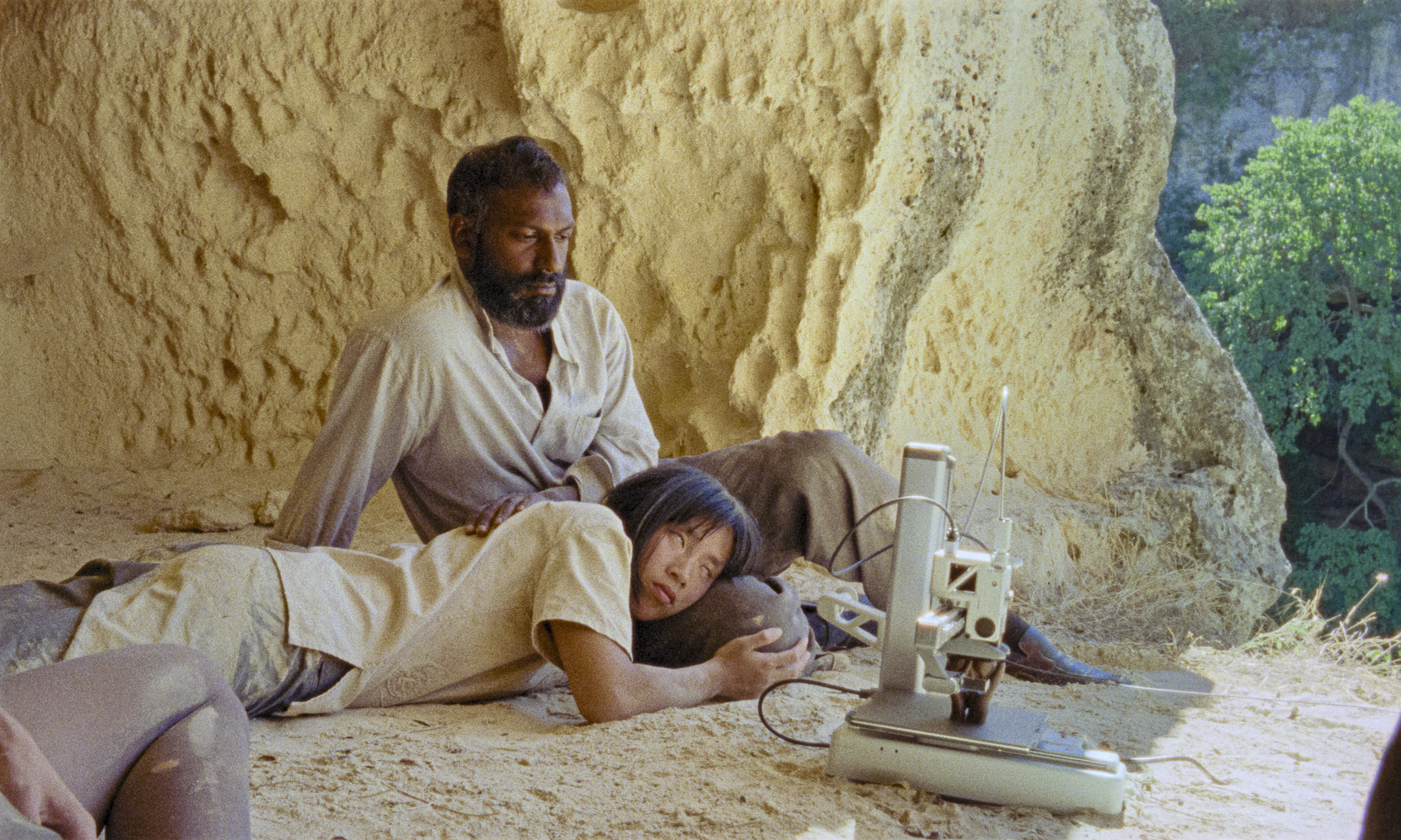
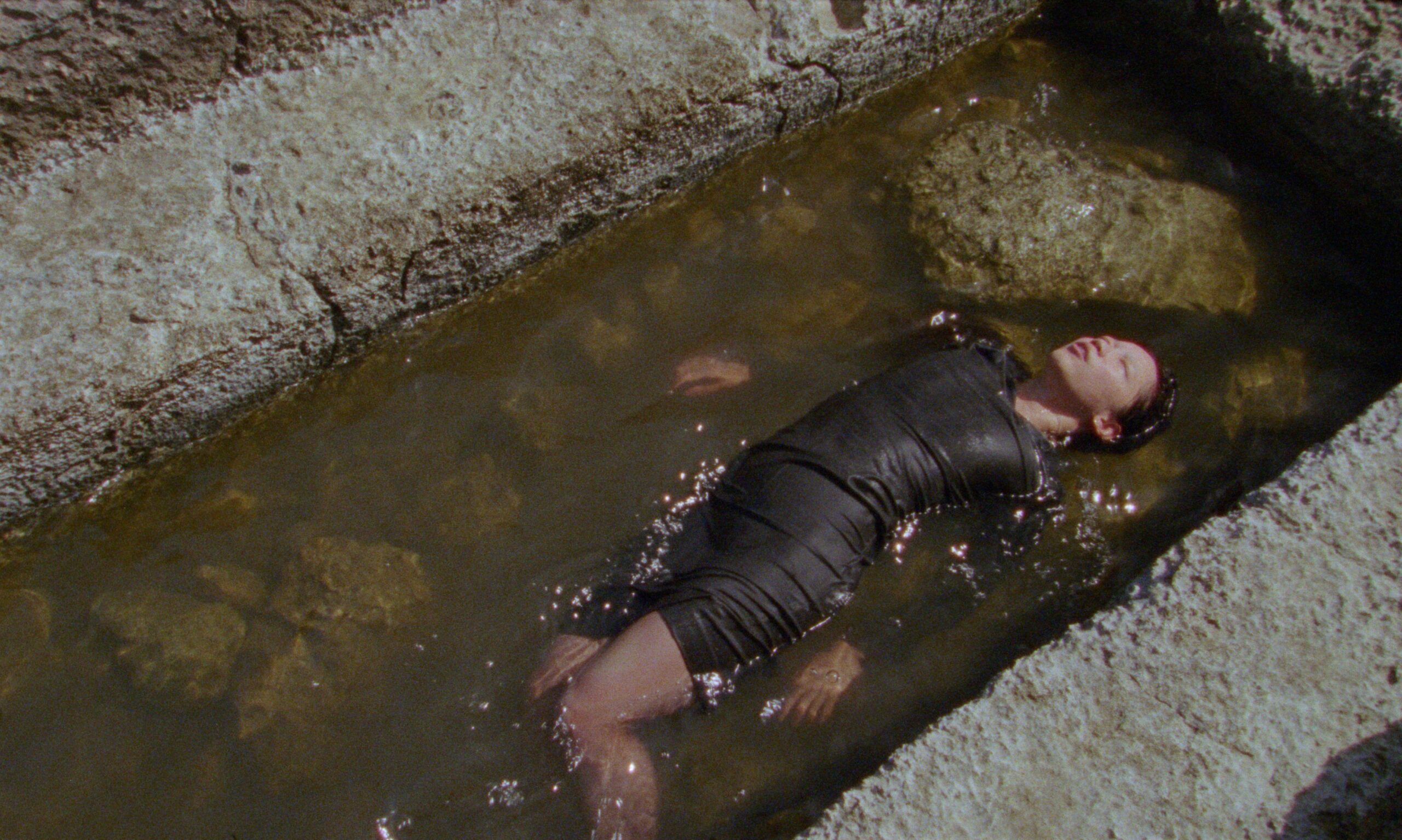
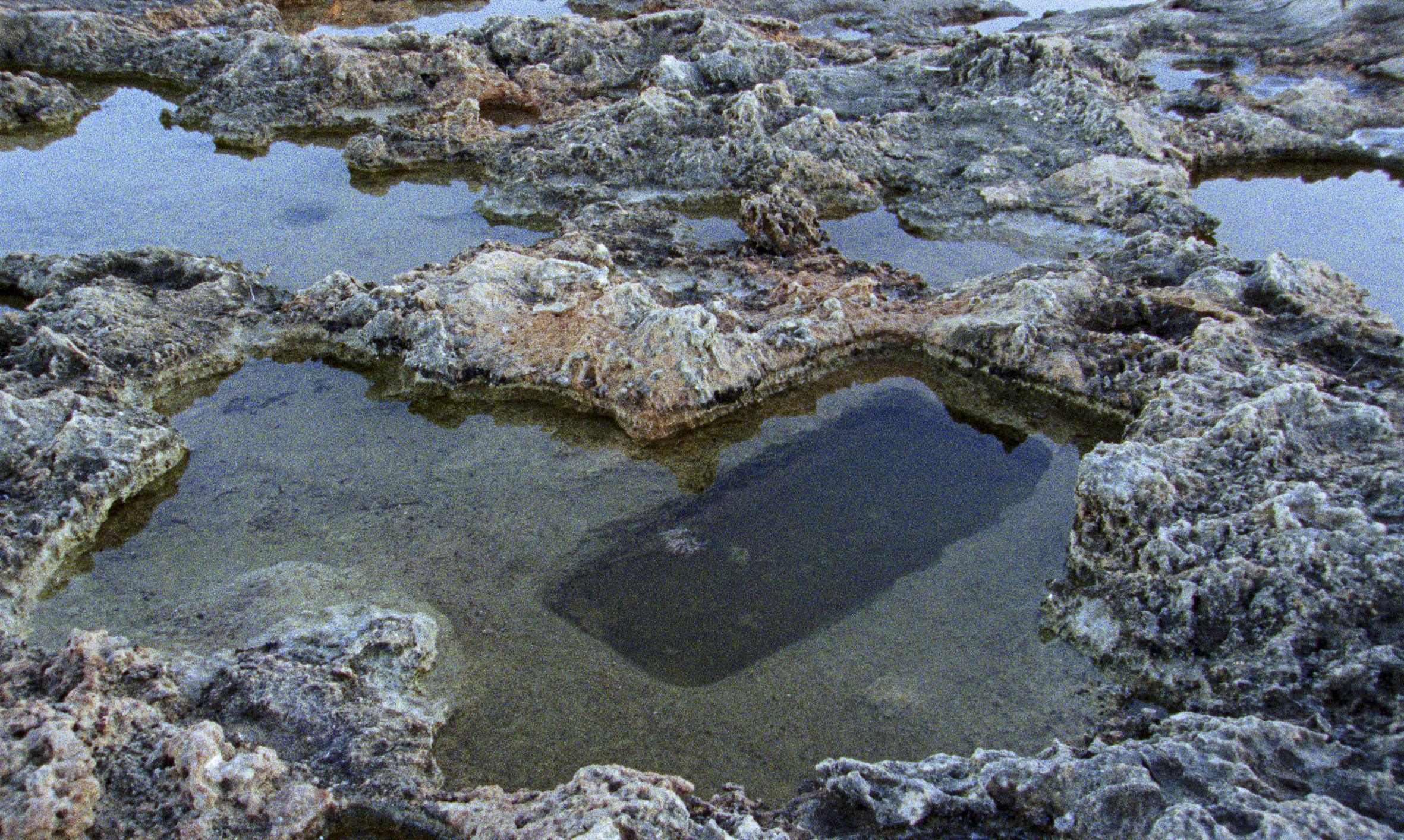
Inscribed on 16mm, animism sings anarchy is a performative and poetic attempt to translate archaeological research and materials into songs, feelings, movement, and altered states. The film draws on the late Lithuanian anthropologist and archaeologist Marija Gimbutas’s research into Neolithic matrilineal, animist societies—a source of inspiration for artists, academics, and environmentalists associated with second-wave feminism. Filming took place at locations that coalesce with, and challenge notions of, pre-historical narratives; the Museo delle Civiltà in Rome and in Apulia near Grotta Scaloria, the site of a Neolithic water cult where Gimbutas undertook excavations in the late 1970s.
Building on her practice of working through the body and with place, Budvytytė structures the film’s scenes around museum interiors and an Apulian coastline populated by ancient caves and watery burial grounds. Shaped by these places, the sequences unfold like ritual movements: a form of animist prayer tethering the choreography to natural landforms and remnants of the past. Facsimiles of anthropomorphic deities – rendered as 3-D printed figurines and modest photocopies – offer a devotional locus for tender, trembling choreographies: gestures that suggest states of trance, ecstasy and surrender.
Lithuania has participated in the International Art and Architecture Exhibitions of La Biennale di Venezia since 1999. The Lithuanian Pavilion has been awarded a special mention four times, and in 2019 it won the Golden Lion for Sun and Sea (Marina).
Accompanying the project will be a catalogue co-edited by Eglė Budvytytė, Virginija Januškevičiūtė and Louise O’Kelly, designed by Goda Budvytytė, with contributions by Amelia Groom, Louise O’Kelly and Sophie Strand, as well as an interview between Virginija Januškevičiūtė and Eglė Budvytytė with Ming-Jou Chen, Marija Olšauskaitė and Fazle Shairmahomed. Published in partnership with the Lithuanian National Museum of Art, Vilnius, Vleeshal Center for Contemporary Art, Middelburg and BOM DIA BOA TARDE BOA NOITE, Berlin.
Exhibition and spatial design has been conceived by Marija Olšauskaitė, an artist who employs various modes of collaboration in her practice.
The combined viewing time across all screens is approximately 50 minutes, with the 16mm film transferred to 4k projection.
Eglė Budvytytė
animism sings anarchy
9 May–22 November 2026
Fucina del Futuro, Castello 5063/B
Pavilion working hours
11:00–19:00 (May–Sept)
10:00–18:00 (Oct–Nov)
Closed on Mondays
Commissioner Lolita Jablonskienė
Curator Louise O’kelly
Artist Eglė Budvytytė
Exhibition Designer Marija Aušra Olšauskaitė
Graphic Designer Goda Budvytytė
Project Manager Aušra Trakšelytė
Exhibition Design Producer Mindaugas Reklaitis
Exhibition Design Advisor Karlis Berzins
Coordinators: Goda Aksamitauskaitė, Egla Mikalajūnė, Evaldas Stankevičius
Local Coordinators: Marco Scurati, Lisa Balasso
International Public Relations Studio Nicola Jeffs
Technical Team: Kotryna Butautytė, Antanas Gerlikas, Tomas Karolis Kucharskis, Salvijus Misevičius, Vytautas Narbutas, Jonas Rudzinskas, Andrius Valskys, Giedrius Zubrickas
Eglė Budvytytė is an artist based in Vilnius and Amsterdam. Her work has been presented internationally, including Le Plateau, FRAC, Paris (2024); Canal Projects, New York; Vleeshal, Middelburg (2023); the 59th International Art Exhibition of La Biennale di Venezia; Whitechapel Gallery, London (2022); Riga International Biennial of Contemporary Art (RIBOCA) (2020); Renaissance Society, Chicago (2019); Baltic Triennial (2018); Lofoten International Art Festival; Block Universe Festival, London (2017); De Appel Arts Centre; CAC, Vilnius (2016); 19th Biennale of Sydney (2014); and Stedeljik Museum, Amsterdam (2012) amongst others. Budvytytė has been artist in residence at Palais de Tokyo, Paris; Nida Art Colony, Lithuania; OCA, Norway and WIELS, Brussels.
Louise O’Kelly is an independent curator and arts professional specialising in contemporary art and performance. As the founder of Block Universe (2015–2022), London’s leading international performance art festival, she curated over 60 productions—including 30 new commissions and 14 UK premieres—partnering with Tate Modern, the Royal Academy of Arts, the British Museum, ICA, Whitechapel Gallery, and others. She also presented international programmes in Italy, Germany, the UAE, and online. O’Kelly has lectured at institutions including Goldsmiths, Boston University, and the Guildhall School (with the Barbican). She co-hosted Soho House’s Art Talks series (2013–2019) and contributed to sector research, serving on the Live Art Sector Review (LADA & Arts Council England, 2019–2021), co-founding the Performance Research Network (UK), and working as an Associate Researcher for Precarious Movements: Choreography & the Museum (2022–2023).
Lolita Jablonskiene (PhD) is an art historian and curator based in Vilnius, Lithuania. She is the director of the National Gallery of Art in Vilnius, a subdivision of the Lithuanian National Museum of Art, in charge of its diverse exhibitions’ program which included partnerships with V&A, London, Musée d’Orsay, Paris, Museum of Modern Art, Warsaw, The Jewish Museum, NY, Tate St Ives, and other institutions. Jablonskienė is an ex-commissioner of the Lithuanian pavilions at the International Art Exhibition of La Biennale di Venezia in 1999 and 2005; has curated modern and contemporary art exhibitions in her home country and abroad, contributed art critical texts to Lithuanian and international press; associate professor at the Vilnius Academy of Arts.
Marija Olšauskaitė is an artist who employs various modes of collaboration in her practice. She has participated in exhibitions internationally, including solo exhibitions The Softest Hard, Carré d’Art, Nîmes (2024); Never act in haste, PM8/Francisco Salas gallery, Vigo (2024); sekretas, Grazer Kunstverein, Graz (2023); Witness on our behalf, Contemporary Art Centre, Vilnius (2019). Projects with Eglė Budvytytė include Song Sing Soil, Vleeshal, Middelburg (2023); Songs from the Compost: Mutating bodies, imploding stars, the 59th International Art Exhibition of La Biennale di Venezia (2022). Represented by PM8/Francisco Salas.
International Press Enquires: Studio Nicola Jeffs, Nicola Jeffs and Siobhan Scott, nj@nicolajeffs.com / ss@nicolajeffs.com
Organised by Lithuanian National Museum of Art
Presented by Ministry of Culture of the Republic of Lithuania
Financed by the Lithuanian Council for Culture
Film produced in collaboration with Kanal – Centre Pompidou and EMMA – Espoo Museum of Modern Art with support from the Saastamoinen Foundation
Filmed in collaboration with MUCIV – Museo delle Civiltà, Roma
Film production supporters: Mondriaan Fund, Amsterdam; Magdalena Sabalė; City of Manfredonia; Block Universe, London; aketuri, Vilnius; Cosmica servisas, Vilnius; Andrius Urniežius
Sponsors: Barco; Girteka; VMG Group; Produttori di Manduria, Manduria; Wood Line
Publication partners: Vleeshal Center for Contemporary Art, Middelburg; BOM DIA BOATARDE BOA NOITE, Berlin
Partners: Upė Foundation, London; Cultura Lituana in Italia 2026–2026
Media partners: Lithuanian National Radio and Television, JCDecaux Lithuania