The Worlds of Jurgis Miksevicius
21 May – 4 October, 2026
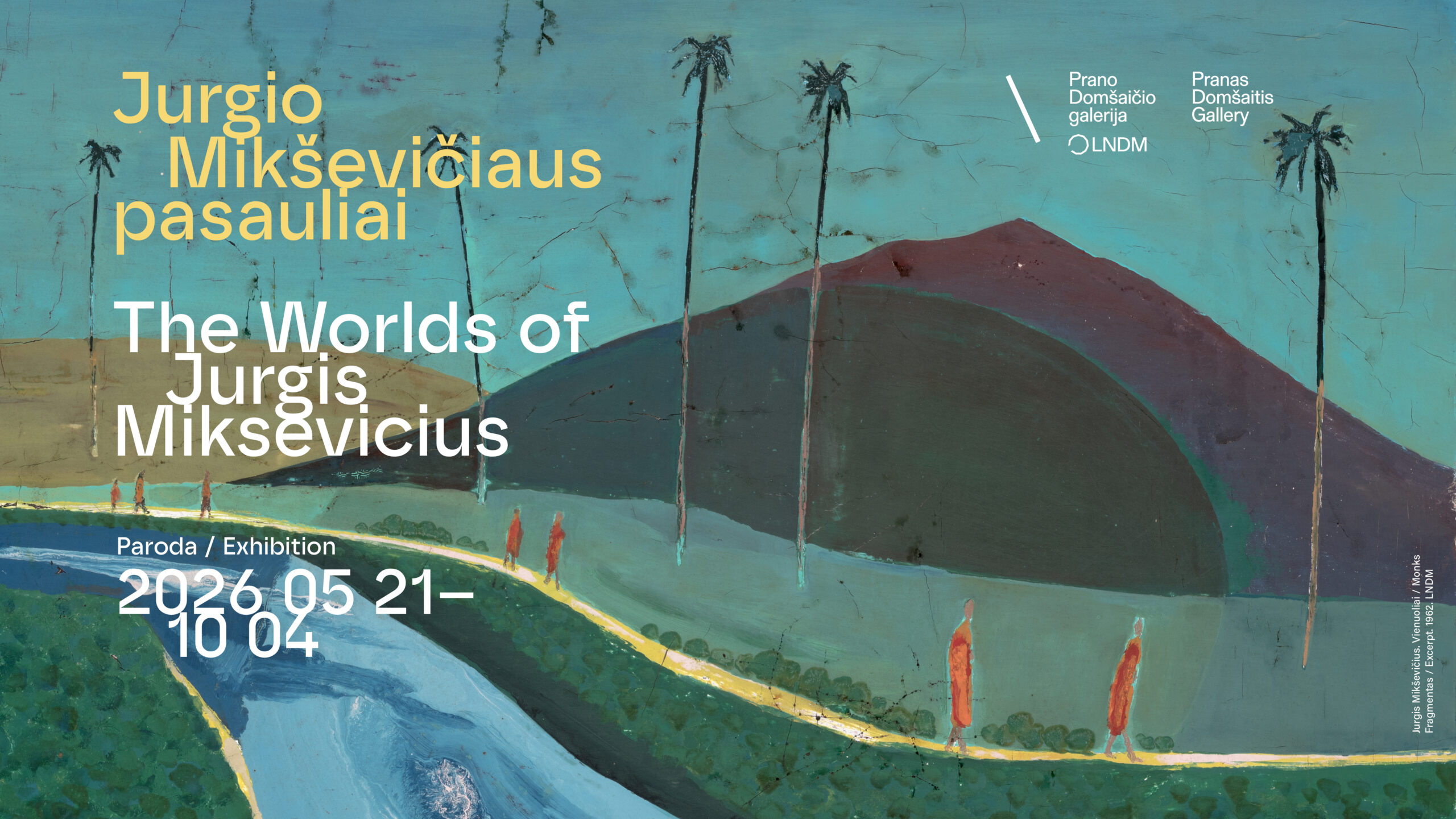 This is the first presentation of works by Jurgis Mikševičius (1923–2014), the Lithuanian artist who worked in Australia, of such scale in Klaipėda. His creative phenomenon was widely publicised in Australia to mark the occasion of the centenary of his birth, with a number of solo exhibitions being held in Leura, Manly and Bathurst. Seeking to introduce Lithuania’s art society to the creative legacy of this Lithuanian-Australian artist, the Lithuanian National Museum of Art is pleased to present the representative and valuable collection gifted to Lithuania, formed by the artist’s daughters Carolyn Leigh and Helena Miksevicius. It features 68 paintings and graphic art works, and part of his personal archive.
Jurgis Mikševičius was born on 8 March 1923 in Šiauliai; his father Medardas was a construction engineer and his mother Elena was a doctor-paediatrician. Jurgis graduated from the Aušra boys’ gymnasium in Kaunas. When the family was forced to flee Lithuania in 1940, he ended up continuing his education in Berlin and studied architecture at the University of Technology Darmstadt from 1946. Miksevicius attended the Workshops for Creative Art, Darmstadt under the guidance of Prof. Paul Thesing, following the Bauhaus principles of instruction. He learned about colour theory and the basics of abstraction and design. These years of study in Germany allowed Miksevicius to mature as an artist, forming his aesthetic value system and refining his artistic tastes.
In 1948 the artist emigrated to Australia. Initially, he lived and worked at a migrant camp in Bathurst (New South Wales) as required by the two-year government work contract that compensated European migrants’ journeys to the far-away continent; his job was to paint and decorate halls. In 1949 he moved to Canberra where he had to finish his contract working in construction as a house painter. That same year he was the first among Lithuanian migrants to become a member of the Artists’ Society of Canberra, actively participating in exhibitions. In 1953 the artist moved to Sydney where he joined the Contemporary Arts Society and held art shows. Miksevicius was one of the founding members of the Baltic artists’ group Six Directions, and also participated in joint shows with Lithuanian artists such as Algirdas Šimkūnas, Henrikas Šalkauskas and others. Jurgis worked as an art teacher at the Birrong, Beverly Hills and Asquith girls high schools from 1961. Back in his study years and later on, when preparing for his teaching activities, Miksevicius fostered an interest in religious and philosophical Hindu texts and Indian art. He travelled to India a number of times (in 1978, 1982 and 1987) and practised Buddhism. In around 1978 Miksevicius withdrew from public artistic life, though he did not abandon his creativity, continuing to paint to his last days.
The artist’s creative legacy consists of landscapes, portraits, still lifes, abstract compositions and drawings. His paintings express an intensive emotional state identifiable with the work of German expressionists Ernst Ludwig Kirchner, Karl Schmidt-Rottluff and Eric Heckel. Jurgis’ search for new harmony in colour and his modern expression bring him closer to the abstract and avant garde experiments of Paul Klee, while his meditative moods are a reflection of Indian mystical practices. Painful European experiences of war, his love for the Australian landscape, a warm and sensitive relationship with fellow humans and the sacral dimension all come together in the multifaceted work of this artist.
Jurgis Miksevicius passed away at his home in Bensville on 23 July 2014. His ashes were scattered in the nearby surroundings.
Institutions including the National Gallery of Australia in Canberra, Lithuanian National Museum of Art, M. K. Čiurlionis National Museum of Art, Bathurst Regional Art Gallery, Manly Art Gallery and Museum, as well as the artist’s family and private collectors, have works by Miksevicius in their collections.
Curator: Regina Urbonienė
Coordinators: Skaistė Marčienė Aurelija Malinauskaitė
Design Rūta Mozūraitė
Design: Edita Namajūnienė
- Purchase an e-ticket for this exhibition
- Book a guided tour of this exhibition by phone +370 46 410 421, email domsaicio.edukacija@lndm.lt
- Plan your visit to the Pranas Domšaitis Gallery
33 Liepu st, LT-92145, Klaipėda, Lithuania
+370 46 410 412
domsaicio.galerija@lndm.lt